A fence estimate usually shows up as a single number at the bottom of a page. Nine thousand dollars. Take it or leave it. If you have never bought a fence before, there is no way to tell whether that number is fair, which parts of it are negotiable, or what would happen to it if you moved the gate ten feet.
So here is the whole thing taken apart. These are our own installed prices for the greater Pittsburgh area in 2026, materials and labor together, the same figures that drive our fence cost calculator.
The fence run is most of the number
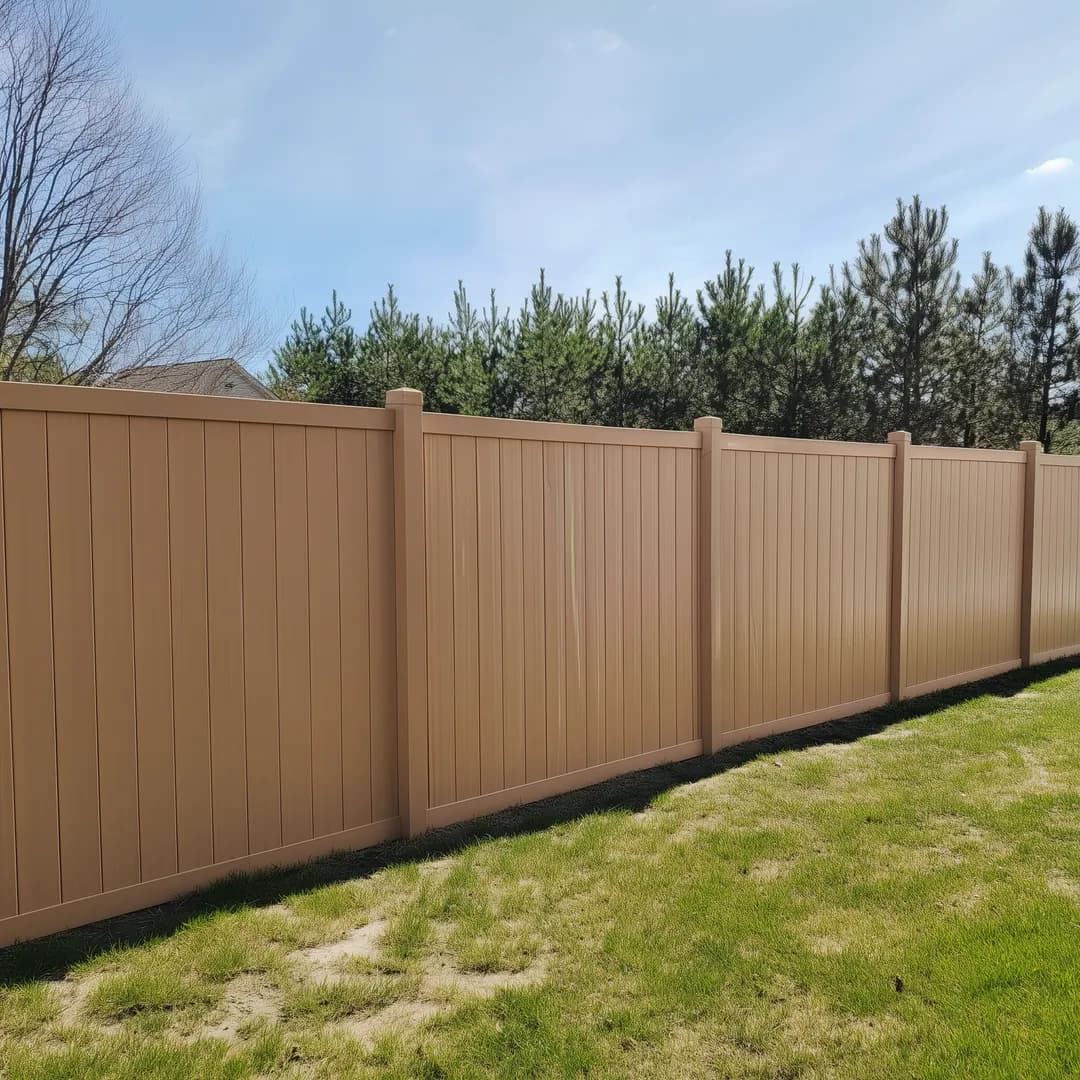
Almost every estimate is dominated by one line: linear feet of fence, times a rate. For a six-foot fence installed, our rates run $70 to $80 per foot for aluminum, $50 to $65 for vinyl privacy (white or wood-tone), $70 to $90 for mixed material, and $30 to $40 for chain link. Four-foot aluminum comes in lower, at $50 to $60 per foot.
A typical Pittsburgh back yard takes 120 to 200 linear feet to enclose. At 150 feet of six-foot white vinyl privacy, the most common privacy job we install, the fence run alone lands somewhere around $7,500 to $9,000.
The range is real, not padding. The low end is a clean, flat, straight run with easy access. The high end is a yard where every post has to be dug by hand and the material has to be carried a hundred feet from the truck.
Gates are their own line
A walk gate is not a section of fence with a hinge on it. It is a separate assembly with its own hardware, and it gets priced separately: $500 to $800 each, whatever the fence type. Double drive gates wide enough for a vehicle cost more.
Worth knowing when you compare two quotes: a contractor can make a bid look cheaper by quoting one gate where you asked for two.
Slope is the line nobody warns you about
This is where Pittsburgh estimates come apart. Half the yards in the South Hills sit on a grade, and a graded yard costs more to fence than a flat one. Not because of material, since the fence is the same fence, but because of digging and layout time.
We price a moderate slope at 15 percent above the base rate and steep or rocky ground at 30 percent, applied to the fence run and not to the gates. On that same 150-foot white vinyl job, a steep yard adds something like $2,250 to $2,700.
Most homeowners meet that adjustment for the first time when an installer is already standing in the yard, which is a bad moment to learn about it.
Taking the old fence out
If something is already there, it has to come out and go somewhere. Removal and haul-away runs $3 to $8 per foot. On 150 feet that is another $450 to $1,200 that a replacement job carries and a new installation does not.
Why our prices are on the website
Fence pricing normally reaches homeowners one estimate at a time, which makes it almost impossible to tell whether any single number is reasonable without collecting three of them and losing a few weekends. We would rather publish ours.
The calculator takes your material, footage, height, gate count, terrain, and whether an old fence has to come out, then returns an itemized range. It does not ask for your name or your email address, and it never will. Look at the number, and if it is in the neighborhood of what you expected, then call somebody.
What to do with the number
When you have a quote in hand, the useful question is not whether the total is big. It is whether the total is explained. Ask which line is the fence run and which is gates. Ask whether removal is in there. Ask what the yard did to the price.
A contractor who can answer those three questions off the top of their head has actually walked your property. One who cannot is guessing, and you will meet the difference as a change order.