Pittsburgh winters are hard on fences. Freeze-thaw cycles, ice load, ground movement, and months of moisture exposure add up, and most of the damage isn't obvious until you go looking for it. A walkthrough in early spring, before the ground dries out and the growing season starts, is the best time to catch problems while they're still small.
Here's what to check, broken down by part of the fence and by material.
Posts first: everything else follows from them
Posts are the structural foundation of the fence. If they've moved, the panels and gates will show it too. Walk the fence line and check each post for:
- Heaving. Frost heave happens when moisture in the soil freezes and expands, pushing posts upward. Look for posts that sit higher than their neighbors, have a gap between the post base and the ground, or rock when you push them. Even an inch of heave can throw a gate out of alignment.
- Leaning. A leaning post that wasn't leaning last fall has either heaved, had its concrete footing crack, or lost soil support due to erosion. Push the post firmly from each side: a well-set post shouldn't move at all.
- Rot at grade. For wood posts, the most vulnerable point is where the post meets the ground. Probe the base with a screwdriver. If it sinks in without much resistance, the post is rotting from the inside.
Panels and pickets
Once you've checked the posts, work your way along the panels. What to look for depends on your material:
- Vinyl and PVC. Cold makes vinyl brittle. Check for cracks along panel edges and at stress points like corners and fastener holes. Also look for panels that have popped out of their channels: this happens when posts shift and the panels lose their tension. Discoloration (yellowing or chalking on white vinyl) is cosmetic but worth noting.
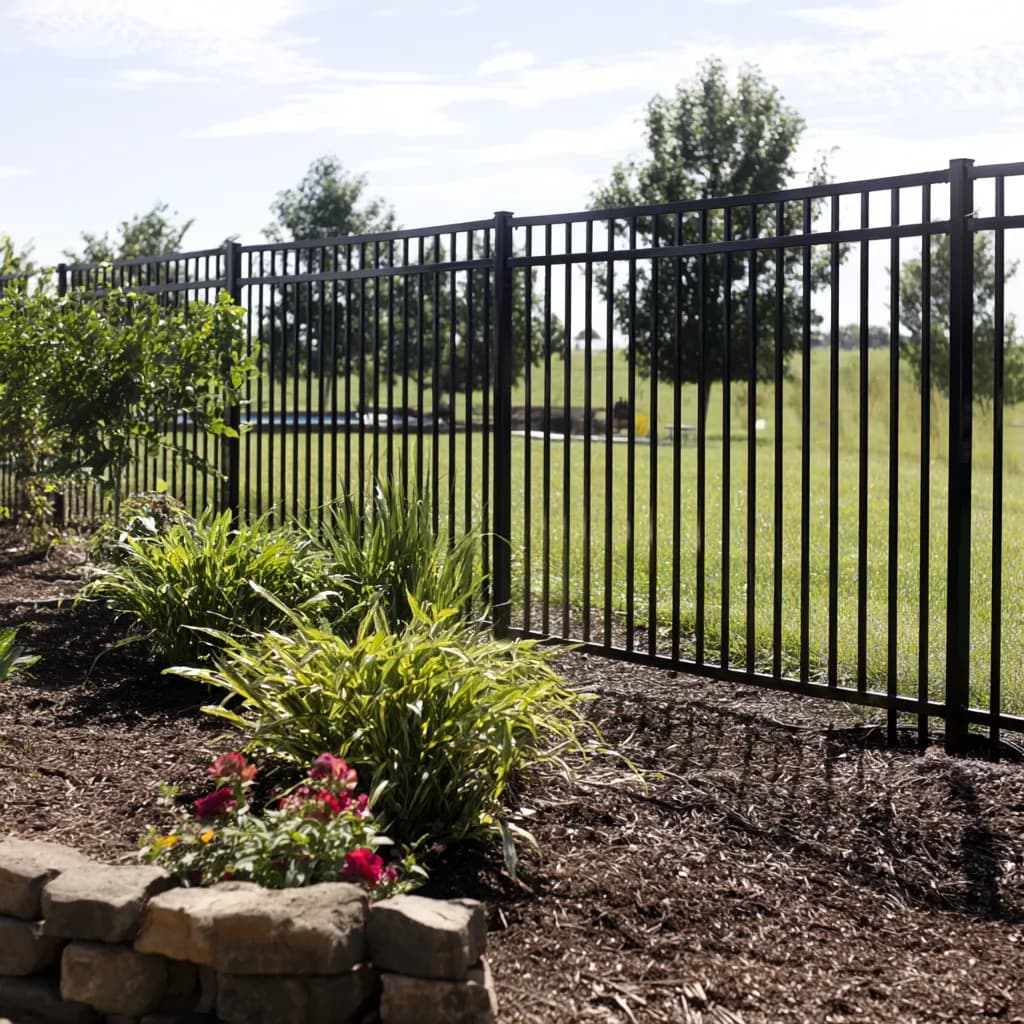
- Aluminum. Aluminum holds up well in cold, but check for bent sections, usually from snow load, ice, or something falling against the fence. Look at the fasteners too: screws and rivets at panel joints are where surface rust can start, especially if the powder coat has been scratched.
- Mixed material. Check the vinyl boards for warping or loose fit in the aluminum frame, and look at the frame finish for chips or rust at the cut ends.
- Chain link. Look for stretched or buckled mesh sections. Ice and snow accumulation can put significant load on chain link and distort the weave. Check the top rail for bends and the tension wire at the bottom for looseness.
Gates
Gates take more abuse than any other part of the fence: they're opened and closed repeatedly, and they're usually the first place to show problems from post movement. Check that:
- The gate swings freely without dragging on the ground or binding on the latch side
- The hinges are tight and the hinge hardware hasn't corroded or pulled away from the post
- The latch engages cleanly: if you have to lift the gate to get it to latch, the post has shifted
- Double gates meet evenly in the center with consistent gap spacing
A gate that's slightly off can usually be corrected with a hinge adjustment. One that's significantly misaligned usually means a post problem that needs to be addressed first.
Hardware and fasteners
Go over all visible hardware: screws, bolts, hinges, latches, post caps, and rail brackets. Tighten anything that's worked loose over the winter. Surface rust on hardware can be treated early with a wire brush and rust-inhibiting paint; left alone, it spreads and weakens the connection.
On aluminum fences, check that post caps are still seated. They're mostly cosmetic, but a missing cap lets water pool inside a hollow post.
The base of the fence
Look at the soil and ground surface along the fence line. Erosion can undercut posts and create gaps under panels that let pets out or pests in. If you have gravel or a concrete mow strip along the fence line, check that it hasn't shifted or settled away from the posts.
When to call someone
Most homeowners can handle tightening hardware and reseating a popped panel. But heaved or leaning posts, cracked concrete footings, and significant gate misalignment are worth having a professional look at. Resetting a post the right way (with proper depth, correct footing, and appropriate diameter for your panel weight) is one of those jobs where doing it wrong just means doing it again in two years.
If you're in the Pittsburgh area and something on your inspection turns up a question, give us a call. We're happy to take a look.