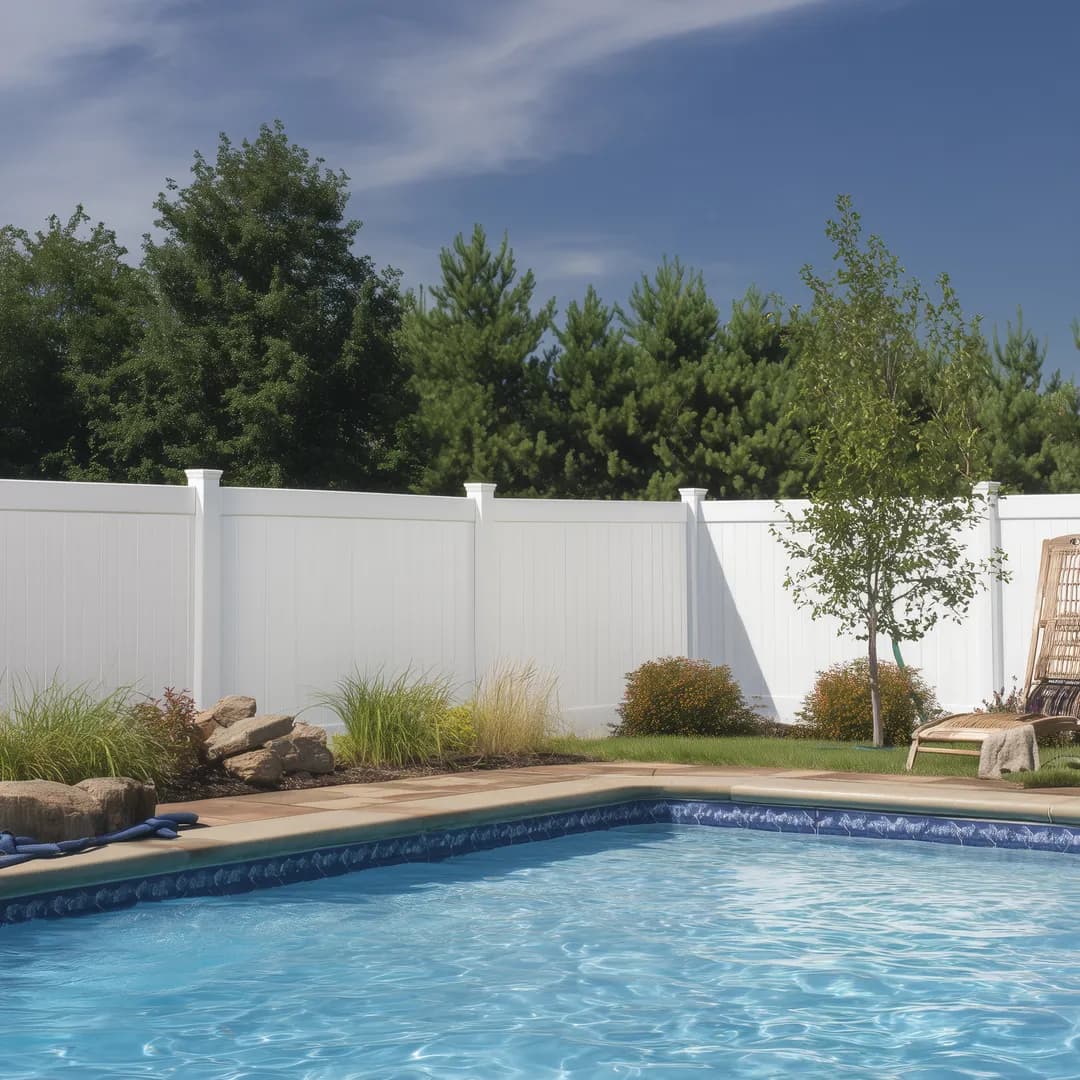
A pool changes the fencing conversation entirely. A privacy fence is largely a matter of preference; a pool barrier is a matter of code, and the requirements are specific about height, gaps, and how the gate latches. Getting it wrong isn't just a failed inspection, it's a genuine safety issue. Here's what Pennsylvania actually requires and how to meet it.
Where the rules come from
Pennsylvania builds its residential pool barrier requirements on the model code that most municipalities adopt (the International Residential Code, which carries forward the pool barrier language many people still call BOCA from the older code era). Individual boroughs and townships across Allegheny County adopt and sometimes amend these, so the specifics can vary slightly by municipality. Always confirm with your local code office. That said, the core barrier requirements are consistent almost everywhere, and they're what inspectors look for.
Barrier height: 48 inches is the baseline
The barrier around a residential pool must be at least 48 inches (4 feet) high, measured on the side facing away from the pool. That's the minimum. Many homeowners go taller for privacy or because a local amendment requires it, but 48 inches is the floor almost everywhere in Pennsylvania.
Height is measured from the finished ground surface. On a sloped Pittsburgh lot, that measurement can change along the fence line, which means a barrier that meets height at one end may fall short at another. This is one reason pool fencing on graded yards needs careful layout.
Gaps: the details that fail inspections
Height is the easy part. The gap rules are where a lot of barriers fall short. The code targets any opening a small child could use to get through or climb:
- Ground clearance: the gap between the bottom of the barrier and the ground can be no more than 4 inches (2 inches over a solid surface like a deck or concrete).
- Vertical members: for fencing with vertical pickets, the space between them must be less than 4 inches, so a child cannot pass through.
- Horizontal members: if the fence has horizontal rails close enough to act as a ladder (less than 45 inches apart), the picket spacing tightens to under 1.75 inches, and the code prefers those rails on the pool side. This is exactly why open, vertical-picket aluminum is such a common pool barrier: it avoids the climbable-ladder problem by design.
These clearances are the reason you cannot simply repurpose any existing fence as a pool barrier. A ranch-rail or wide-picket fence that looks fine for a property line will not pass as a pool enclosure.
Gates: self-closing, self-latching, opening outward
The gate is the most heavily specified part of a pool barrier, because it's the part that gets used. Requirements:
- The gate must be self-closing and self-latching, swinging away from the pool.
- If the latch release is on the pool side of the gate, the release mechanism must be at least 54 inches above the ground, out of a young child's reach.
- Where the release is mounted lower, additional shielding around the latch is required so it can't be reached through or over the gate.
A gate that doesn't fully self-latch every time is the single most common pool barrier failure. It's worth testing yours regularly, not just at inspection.
When the house is part of the barrier
If a wall of the house forms one side of the pool enclosure, any doors leading from the house to the pool area typically need an alarm or another approved safeguard, since that door is effectively a gate in the barrier. This catches a lot of homeowners off guard, so confirm how your layout is treated before you build.
Aluminum is the default pool fence for good reason
Powder-coated aluminum has become the standard pool barrier in Western Pennsylvania, and the code requirements are a big part of why. Vertical aluminum pickets naturally hit the under-4-inch spacing rule, the smooth top and lack of climbable horizontal rails satisfy the anti-climb provisions, and self-closing hinges plus a magnetic self-latching gate are stock hardware for pool applications. Aluminum also shrugs off pool-side moisture and freeze-thaw without rusting or rotting, and its open sight lines let you keep an eye on the water.
Vinyl and other materials can be engineered to meet pool code as well, but they take more planning to satisfy the gap and climbability rules, and they block the sight line to the pool. For most residential installs, aluminum is the path of least resistance to a compliant, good-looking barrier.
The barrier is only part of the project
Pool builders such as Elements Landscape Management in Western PA handle the pool construction and the surrounding hardscape, and the fence has to coordinate with that work: deck edges, grade, and gate placement all interact with the barrier. On the planting side, Q&A Landscaping's pool landscaping ideas for Pittsburgh shows how greenery softens an aluminum enclosure without interfering with the code clearances. A pool area usually comes together as a few trades in sequence, and the fence is the piece that has to satisfy code.
If you're adding or replacing a pool in the Pittsburgh area and need a barrier that passes inspection the first time, we install code-compliant pool fencing across the South Hills and surrounding communities. Reach out and we'll walk the layout with you, height, gaps, gate placement, and all, before anything gets set.