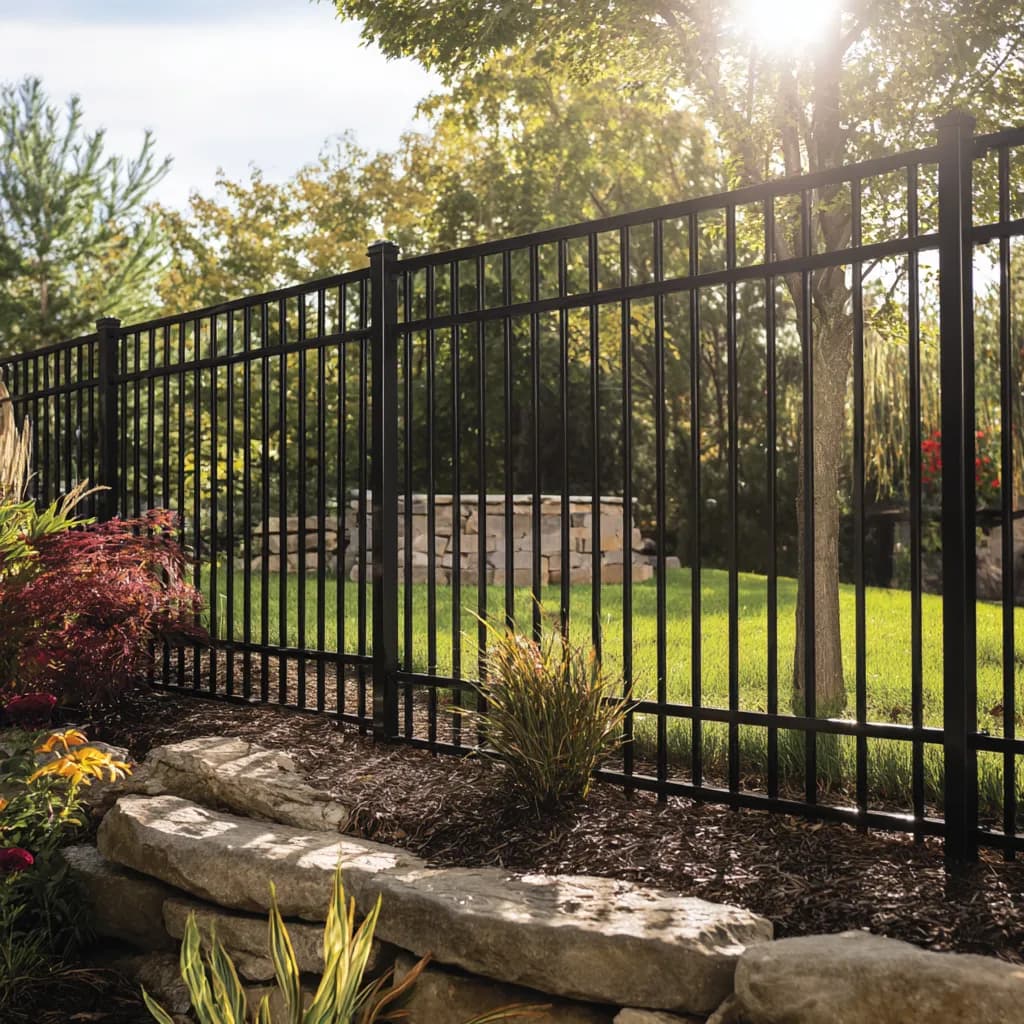
The material decision is the most consequential one you'll make before a fence goes in. It affects how the fence looks, how long it lasts, what it costs to maintain, and how well it holds up to Pittsburgh's specific climate. There's no universally right answer, but there are wrong answers for specific situations. Here's how to think through the options.
The four materials most commonly installed in Western PA
Most residential fencing in the Pittsburgh area comes down to aluminum, vinyl, mixed material, or chain link. Each has a different profile of cost, appearance, longevity, and maintenance. Understanding those trade-offs is how you make a decision you're still satisfied with five years from now.
Aluminum
Aluminum is the most popular choice in the Pittsburgh market, and it earns that position. Powder-coated aluminum is essentially maintenance-free (no painting, no staining, no rust) and it holds up well through freeze-thaw cycles without cracking or warping. It looks clean, comes in a range of styles from open picket to semi-private, and carries a long lifespan when properly installed.
What it doesn't do: provide privacy. The open picket design that makes aluminum look sharp is by nature not a visual barrier. If you're fencing a pool, a front yard, or a property boundary where open sight lines are acceptable, aluminum is hard to beat. If you need a solid barrier, you're looking at vinyl or mixed material.
Vinyl
Vinyl (PVC) is the go-to for privacy fencing in residential applications. A solid vinyl privacy panel gives you a true visual barrier, requires no painting, and won't rot. It's a good long-term material: a quality vinyl installation can outlast the homeowner's ownership of the property.
The trade-offs are worth knowing. Cold makes vinyl brittle: in Pittsburgh winters, a hard impact (a falling branch, a plow throwing debris) can crack a panel in a way that wouldn't damage aluminum. White vinyl also yellows or chalks over time with UV exposure; most manufacturers have improved this significantly in recent years, but it's worth asking about UV stabilizers when selecting a product. Vinyl also costs more upfront than aluminum, though the lifetime maintenance savings are real.
Mixed material
Mixed material fencing pairs an aluminum frame with vinyl boards. The boards run horizontally or vertically for privacy, and some styles add a decorative panel along the top. You get the solid sight line of vinyl with the rigid, powder-coated frame of aluminum, and the two-tone look is distinctive.
The trade-off is price. Mixed material costs more than vinyl or aluminum alone, at $70 to $90 per linear foot installed. For many homeowners the privacy and the finished look are worth it.
Chain link
Chain link is functional, durable, and low-cost, which is why it's still widely installed for utility applications, pet enclosures, and large perimeter fencing. In residential settings in the Pittsburgh suburbs, it's typically chosen where budget matters more than appearance, or where the application is purely utilitarian: a dog run, a rear property line that no one sees, a side yard gate.
A well-installed galvanized or vinyl-coated chain link fence will last decades with essentially no maintenance. If you need to contain an area at a reasonable cost and appearance isn't the priority, it's a rational choice.
How to decide
A few questions cut through the options quickly:
- Do you need privacy? If yes: vinyl or mixed material. Aluminum doesn't provide it. Neither does chain link. This one question eliminates half the options for a lot of homeowners.
- What's the application? Pool enclosures almost always call for aluminum or vinyl, and often have code requirements on height and gate latching. Dog containment needs something solid at grade level. Decorative front yard or property line fencing is where aluminum excels.
- What's your budget per linear foot? At 4 ft, aluminum and white vinyl start at the same $50 to $60 per foot; taller aluminum runs $70 to $80, wood-tone vinyl $55 to $65. Mixed material is the most expensive at $70 to $90. Chain link is the least at $30 to $40. The gap narrows when you factor in long-term maintenance, but upfront cost still matters. For current Pittsburgh ranges by material and height, our fence cost calculator gives you an installed price range in under a minute.
- Do HOA rules apply? Some HOA agreements specifically restrict chain link or require certain colors and heights. Know your rules before you decide, not after.
- How old is the house and what fits the neighborhood? A black aluminum fence reads differently on a craftsman bungalow in Mt. Lebanon than on a newer construction home in Peters Township. Neither is wrong, but it's worth thinking about visual fit alongside function.
One thing worth knowing
The material choice matters, but the installation matters more. A vinyl fence installed with posts set to proper depth in correctly sized concrete footings (with expansion gaps accounted for) will outlast a premium product installed by someone cutting corners on the footing work. When you're talking to contractors, ask how they handle footings for your specific soil conditions. It's the question that separates contractors who know what they're doing from those who don't.
If you're working through this decision and want a straight answer for your specific yard, give us a call. We're happy to walk through the options with you before you commit to anything.